

Depression
Depression is a serious mental disorder that is not only about thoughts and emotions, but also involves changes in brain function.
In prolonged depression, reduced activity is often seen in parts of the brain that are central to energy, motivation, concentration, and the ability to experience pleasure (particularly the left prefrontal cortex). At the same time, increased activity is often observed in more emotional and stress-related brain regions involved in negative emotional processing.
In practice, this imbalance means that the brain generates negative thoughts and emotions to an excessive degree and loses the ability to regulate them. The result is persistent low mood, fatigue, reduced initiative, and at times cognitive difficulties – even when there is objectively no acute problem in the surroundings.
Treatment of depression with rTMS – how it works and what to expect
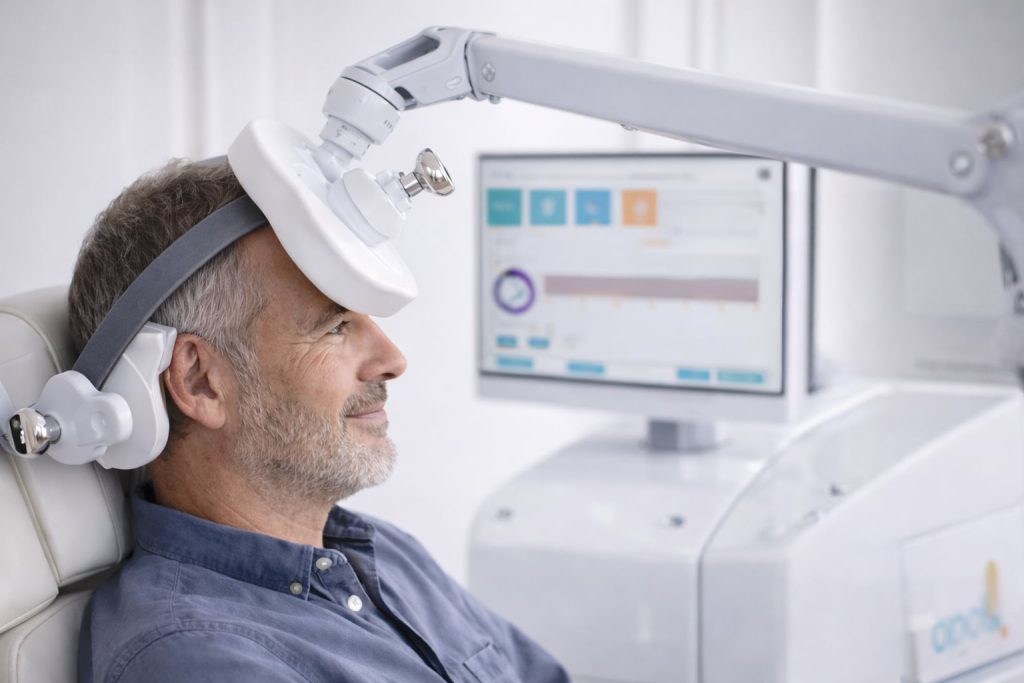
rTMS (repetitive transcranial magnetic stimulation) is a brain-based treatment delivered via a magnetic coil placed over the forehead, with the aim of increasing activity in brain areas that are underactive in depression and thereby helping to restore balance in the brain’s regulatory systems.
In the treatment of depression, stimulation typically targets the left prefrontal cortex, an area that is often underactive in depression. Repeated stimulation over several weeks can increase activity in this region and contribute to more effective regulation of the neural circuits involved in mood, energy, and cognition.
Treatment takes place at the clinic. You sit in a chair, remain awake throughout the session, and can go straight home afterwards. A session can last from a few minutes up to 40 minutes depending on the chosen stimulation protocol, and a full course of treatment most often consists of 30 sessions distributed over six weeks.
Effect and expectations
The vast majority experience the stimulation as completely painless and without discomfort. Typically, a mild tingling sensation is felt on the skin beneath the magnetic coil. Some, however, experience this sensation as uncomfortable or painful, which usually decreases after a period of adaptation.
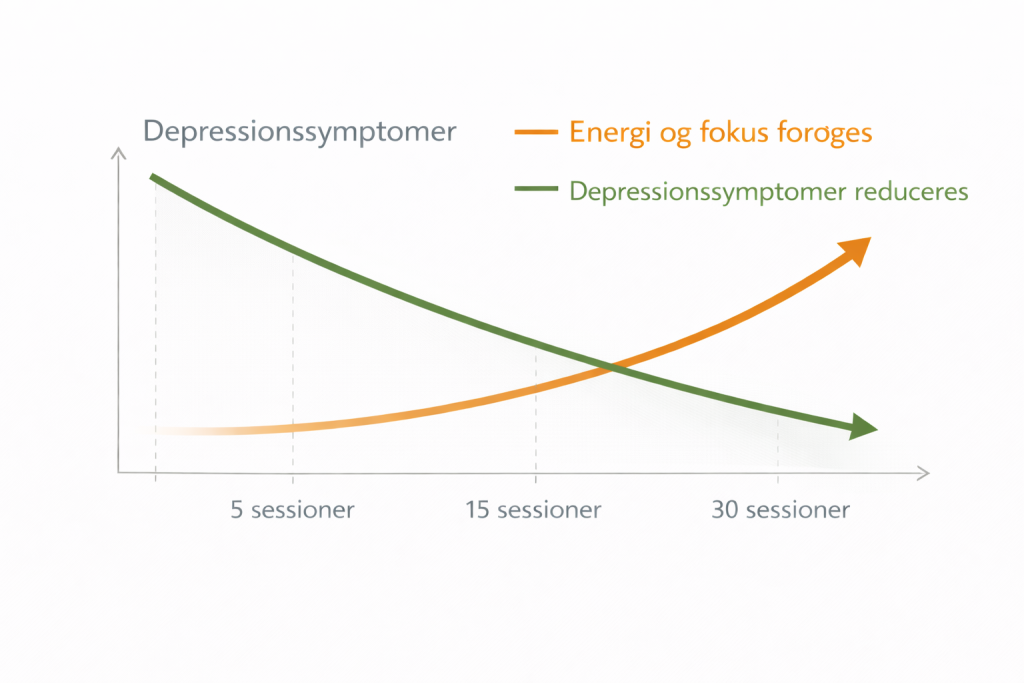
For many patients, rTMS leads to a gradual reduction in depressive symptoms until the full course of treatment is completed. After 10–15 sessions, many experience increased energy, improved mood, better concentration, and greater mental clarity. The effect builds over time and rarely appears after only a few treatments, as the aim of the therapy is to help the brain regain regulatory capacity—this process is known as neuroplasticity and is inherently slow.
The evidence for rTMS in depression is strong, particularly in patients who have not achieved sufficient benefit from antidepressant medication. Some experience marked improvement, others a more moderate effect, and a smaller group experience no significant benefit.
Side effects are usually very mild and short-lived, most commonly mild headache or slight discomfort during stimulation.
Compared with other treatment approaches for depression
Depression is typically treated with a combination of:
-
Antidepressant medication (e.g. SSRIs, SNRIs, or TCAs)
-
Psychotherapy, particularly cognitive behavioural therapy
-
Psychological counselling in psychiatric services or with a private psychologist
-
ECT (electroconvulsive therapy) for severe or life-threatening depression
Many benefit greatly from these treatments, but not everyone. Some experience insufficient effect or significant side effects.
ECT is usually very effective, but requires hospitalisation, is considerably more invasive, and consistently involves more side effects.
rTMS positions itself between these treatments: less invasive than ECT, yet with documented effectiveness and minimal side effects.
Scientific literature
- Randomised controlled trial regarding the use of rTMS as first line treatment for depression:
Should rTMS be considered a first-line treatment for major depressive episodes in adults? (O’Sullivan et al. 2024) – “These observations suggest that rTMS has similar efficacy, fewer side-effects, lower risk of serious adverse events, comparable compliance, the potential for more rapid relief, and cost-effectiveness.“ - Systematic review about the effects of combining rTMS with antidepressant medication:
Antidepressant class and concurrent rTMS outcomes in major depressive disorder: a systematic review and meta-analysis (Zaidi et al. 2024) –
“The combination of rTMS with SSRIs, but not SNRIs, significantly reduced depression severity, increasing response and remission rates.“ - Consensus report by the National Network of Depression Centers, the Clinical TMS Society, and the International Federation of Clinical Neurophysiology: Consensus review and considerations on TMS to treat depression (Trapp et al. 2025)