

Addiction / Substance Use
Substance use disorder is a serious condition in which repeated use of psychoactive substances leads to lasting changes in the brain’s reward and control systems. This may involve the misuse of, for example, opioids, stimulants, cannabis, or other intoxicating substances. Over time, use can develop into compulsive behaviour, where craving for the substance dominates thoughts and actions—even when the consequences are severe.
From a neurobiological perspective, substance use disorder is associated with changes in the brain’s dopaminergic reward systems as well as in the prefrontal regions that are normally responsible for impulse control, decision-making, and behavioural regulation. Repeated substance use weakens the brain’s ability to inhibit craving and increases sensitivity to substance-related cues, which contributes to relapse.
In practice, this dysregulation means that many individuals experience intense cravings, reduced control, and repeated unsuccessful attempts to stop—also after detoxification or longer periods of abstinence. Substance use disorder is therefore not solely a matter of willpower, but of altered brain function.
Treatment of Substance Use with rTMS – how it works and what to expect
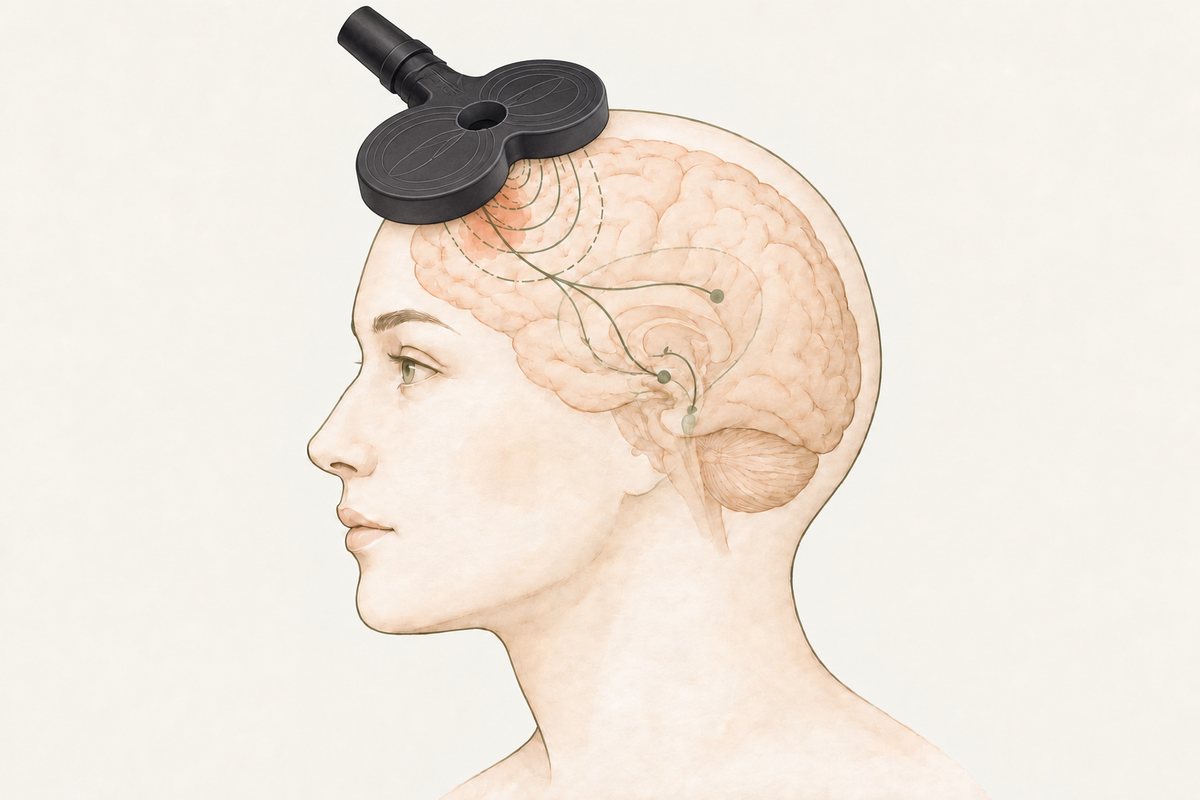
rTMS has been studied as a treatment for substance use disorder with the aim of reducing craving and strengthening the brain’s regulatory control mechanisms. The treatment typically targets prefrontal brain regions, which play a central role in impulse control, decision-making, and inhibition of substance-related behaviour.
Repeated stimulation over several weeks can increase activity in these areas and thereby contribute to improved regulation of craving and impulsive actions. rTMS is used as a supplement to existing treatment and does not replace detoxification, medication, or psychosocial interventions where these are relevant.
Treatment takes place at the clinic. You remain awake throughout the session and can go home afterwards. The stimulation itself lasts no more than 20 minutes, and we set aside at least 45 minutes for each appointment to allow time for preparation and a short conversation. A course of treatment often extends over several weeks.
Effect and expectations
Studies show that rTMS can, for some patients with substance use disorder, reduce craving and lower the risk of relapse during the treatment period. The effect varies between individuals and substance types, and rTMS does not work for everyone. When an effect is achieved, it typically develops gradually over time.
For many, the benefit is not the complete elimination of craving, but increased control and a better ability to maintain abstinence in combination with other treatments. rTMS can therefore function as a supportive tool within a broader treatment approach.
For the vast majority, side effects are mild and short-lived. The most common are mild headache or slight discomfort during stimulation, especially at the beginning of the treatment course.
Compared with other treatment approaches for substance use
Treatment of substance use disorder typically consists of:
-
Detoxification and medical support
-
Psychosocial treatment and therapy
-
Structured rehabilitation and support programmes
| Medication | Treatment programme | rTMS | |
|---|---|---|---|
| How it works | Daily tablets, e.g. for craving or withdrawal | Counselling and groups, often several times a week | You sit in a chair with a coil over your head for no more than 20 minutes and go home afterwards |
| Duration | Often several months | Typically several months | 10 sessions over 2 weeks, then 5 sessions at 1-2 per week |
| Side effects | Vary by medication | No physical side effects | Few and mild, pass quickly |
| When is it chosen? | For certain types of addiction, e.g. alcohol and opioids | Core treatment for addiction | As a supplement to other treatment, especially to reduce craving. Always after individual assessment |
Although many benefit from these interventions, a significant number still experience relapse. rTMS differs in that it directly targets the brain regions involved in craving and impulse control, and for selected patients it may be a relevant supplement to the overall treatment.
Scientific literature
- Systematic review of the effect of rTMS on craving in stimulant and behavioural addiction: Repetitive Transcranial Magnetic Stimulation (rTMS) as a Promising Treatment for Craving in Stimulant Drugs and Behavioral Addiction: A Meta-Analysis (Gay et al., 2022). – “In conclusion, efficacy of rTMS on craving in stimulant and behavioral addiction was highlighted, but recommendations on optimal stimulation settings and its clinical application await further research.”
- Systematic review of the effect of rTMS on methamphetamine use disorder: Efficacy of Repetitive Transcranial Magnetic Stimulation in Patients With Methamphetamine Use Disorder: A Systematic Review and Meta-Analysis of Double-Blind Randomized Controlled Trials (Chang et al., 2022) – “All the studies evaluated craving scores, with rTMS demonstrating a more significant effect than the sham treatment on reducing craving scores (SMD = 0.983, CI = 0.620–1.345, p ≤ 0.001)”
- Study of the safety of rTMS in people with substance use disorders: Repetitive Transcranial Magnetic Stimulation in Substance Use Disorders is Safe and Tolerable: A Systematic Review of 141 Clinical Trials Including 4,299 Participants (Souki et al., 2025). – “Overall, rTMS in SUD samples is safe and well-tolerated regardless of recovery stage and substance. Most reported side effects were mild, self-limiting, and tolerable. This evidence supports the safety of rTMS as a potential stand-alone or adjunctive treatment for SUD.”
Is rTMS right for you?
Book a free, no-obligation initial consultation, and we will assess it together.