

Severe Depression
Severe depression is the most serious form of depression. Symptoms are numerous, intense, and affect almost every aspect of daily life. It may become difficult or even impossible to manage work, studies, family responsibilities, or everyday activities such as eating, showering, or getting out of bed.
People with severe depression typically experience persistent low mood, a loss of interest in almost everything, and overwhelming fatigue or a complete lack of energy. Other common symptoms include:
- Intense feelings of hopelessness and the belief that nothing will ever improve
- Very low self-esteem or overwhelming feelings of guilt
- Severe sleep disturbances
- Significant changes in appetite and weight
- Difficulty concentrating and making even simple decisions
- Marked inner restlessness or, conversely, very slow movements and thinking
- Thoughts of death, suicide, or self-harm
Some people may also develop psychotic symptoms. These can include fixed false beliefs, such as believing they have committed an unforgivable act, caused a catastrophe, or hearing voices that others cannot hear. These symptoms do not occur in every case of severe depression.
Severe depression is not something that can simply be overcome through willpower, and it rarely resolves on its own. It is a serious medical condition that requires prompt professional assessment and treatment. If you have active suicidal thoughts, a suicide plan, or believe you are in immediate danger, call your local emergency services or go to the nearest emergency department immediately.
Treating Depression with rTMS: How It Works and What to Expect
rTMS may be an appropriate treatment for severe depression, particularly when medication and psychotherapy have not provided sufficient improvement or have caused significant side effects. It is especially suitable for severe depression without psychotic symptoms.
Treatment typically targets the left prefrontal cortex. The repeated magnetic pulses are designed to increase activity in this area and strengthen the brain networks involved in regulating mood, energy, motivation, and negative thinking.
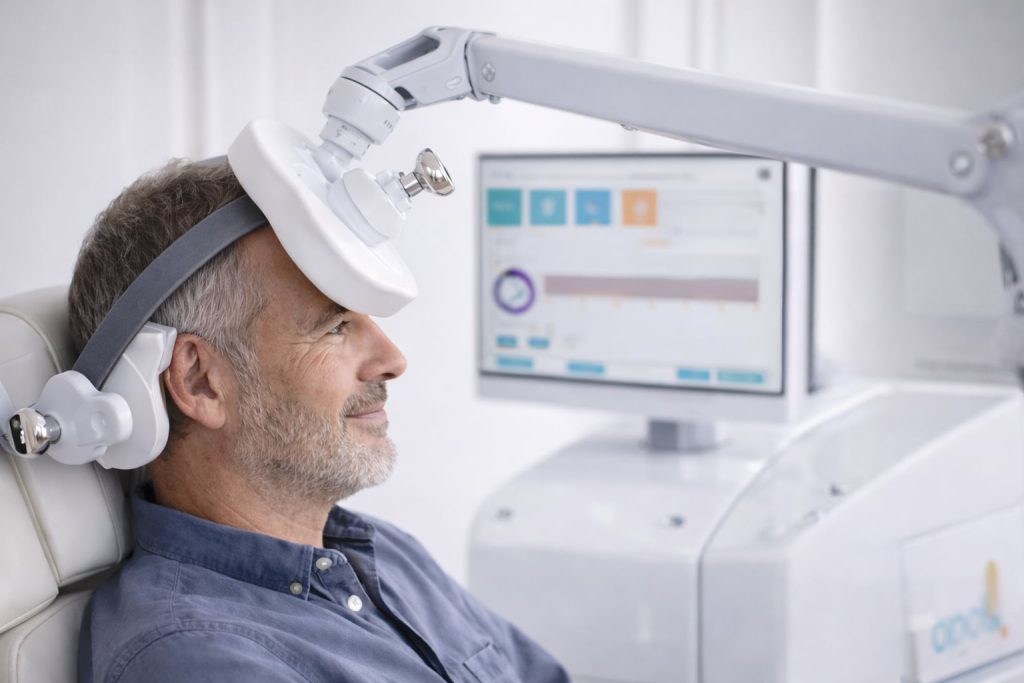
When treatment can be provided on an outpatient basis, you remain awake and comfortably seated in a chair. During the session, you will typically feel a tapping or tingling sensation on your scalp. No anaesthesia is required, and you can return home immediately afterwards. At our clinic, a full course of treatment typically consists of 30 sessions over 2 to 6 weeks.
Before treatment begins, we always assess whether rTMS is the most appropriate option. If there is an immediate risk of suicide, psychotic symptoms, severe self-neglect, or an inability to eat or drink, urgent psychiatric care is required.In these situations, a faster hospital-based treatment such as electroconvulsive therapy (ECT) may be necessary, as the effects of rTMS develop gradually.
Effect and What to Expect
With severe depression, the benefits of rTMS develop gradually over the course of treatment. Early signs of improvement may include increased energy, better concentration, fewer negative thoughts, or a greater interest in the world around you. For many people, these changes do not become clearly noticeable until several weeks into treatment.
Some people experience a substantial improvement and become almost or completely free of depressive symptoms. Others experience a more moderate benefit, while some unfortunately experience little or no meaningful improvement. rTMS is a well-established treatment for depressive episodes, including severe and treatment-resistant depression without psychotic symptoms.
For some people, the benefits persist after completing the initial course of treatment. Others may continue to benefit from medication, psychotherapy, or maintenance rTMS sessions to help sustain the improvement and reduce the risk of relapse.
The most common side effects are a mild headache or slight discomfort during stimulation. These effects are generally mild and temporary. If your depression worsens or your suicidal thoughts increase during treatment, you should contact your healthcare provider immediately or seek urgent psychiatric care.
Compared with Other Treatments for Depression
Severe depression is commonly treated with antidepressant medication, psychotherapy, or a combination of both. In cases involving an immediate risk of suicide, psychotic symptoms, or a very severe clinical condition, ECT may be the fastest and most effective treatment.
| Antidepressant medication | rTMS | ECT | |
|---|---|---|---|
| How it works | You take a tablet every day | You sit in a chair with a coil over your head for no more than 20 minutes and go home afterwards | Requires hospital admission and anaesthesia |
| Duration | Typically 6-12 months | Over in 2-6 weeks | Typically a few weeks |
| Side effects | Vary and can be considerable | Few and mild, pass quickly | Can cause long-lasting side effects, e.g. on memory |
| When is it chosen? | First choice for moderate to severe depression | When you do not want medication, or want a short course without medication or talk therapy. Also when medication has not worked well enough | For severe or life-threatening depression |
rTMS offers a less invasive treatment option that does not require anaesthesia or hospital admission. Unlike medication, it does not affect the entire body and therefore does not cause the typical systemic side effects associated with antidepressants, such as nausea, weight changes, or sexual dysfunction.
Compared with ECT, rTMS generally causes fewer side effects and does not carry the same risk of temporary memory problems. However, its therapeutic effects develop more gradually, which is why ECT may be the preferred option when rapid treatment is essential.
rTMS can be used on its own or in combination with medication and psychotherapy. For many people, this combined approach offers the best opportunity to both reduce depressive symptoms and maintain long-term recovery.
Scientific References
The articles below are freely available in full text.
- Recent systematic review and network meta-analysis comparing rTMS, ECT, and ketamine for treatment-resistant depression without psychosis: Comparative Efficacy and Safety of Intravenous Racemic Ketamine, Repetitive Transcranial Magnetic Stimulation and Electroconvulsive Therapy for Stage 2 or Higher Treatment-Resistant Depression (Terao et al., 2025)
- Large systematic review and network meta-analysis of 113 randomized controlled trials evaluating, among other treatments, rTMS and ECT for acute depressive episodes: Comparative Efficacy and Acceptability of Non-Surgical Brain Stimulation for the Acute Treatment of Major Depressive Episodes in Adults (Mutz et al., 2019)
- Recent international consensus review on the effectiveness, safety, and clinical use of TMS for depression: Consensus Review and Considerations on TMS to Treat Depression (Trapp et al., 2025)
- Danish clinical guidance explaining why ECT is primarily used for severe depression, psychotic symptoms, or high suicide risk: Depression – Lægehåndbogen på sundhed.dk
Is rTMS right for you?
Book a free, no-obligation initial consultation, and we will assess it together.