Repetitive Transcranial Magnetic Stimulation (rTMS)
What is rTMS treatment?
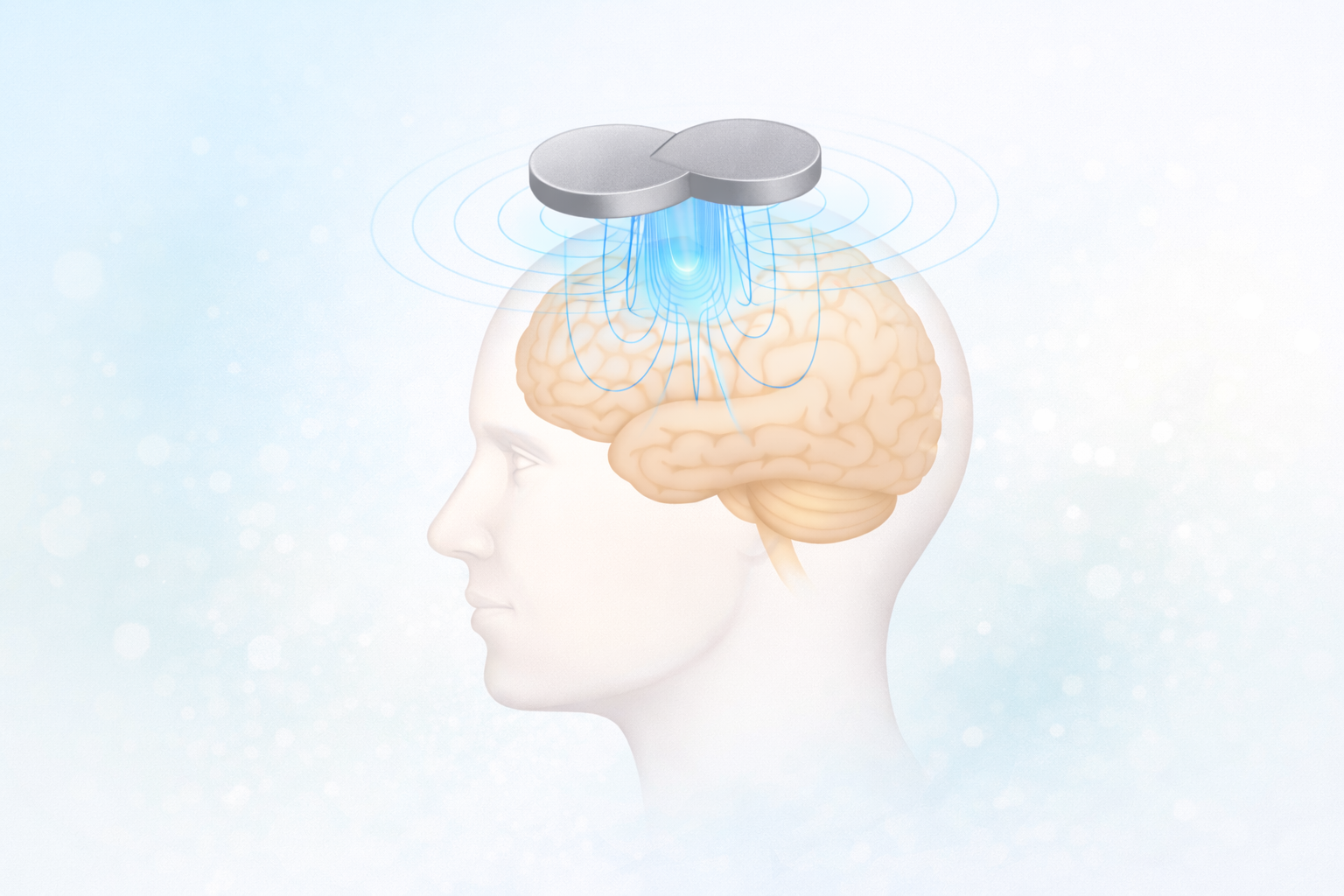
Repetitive Transcranial Magnetic Stimulation (rTMS) is a well-documented treatment method used for depression and other mental health conditions. The treatment is delivered via a magnetic coil placed on the scalp. The stimulation influences brain activity through mild magnetic impulses that stimulate areas of the brain playing a central role in the regulation of mood and emotional balance.
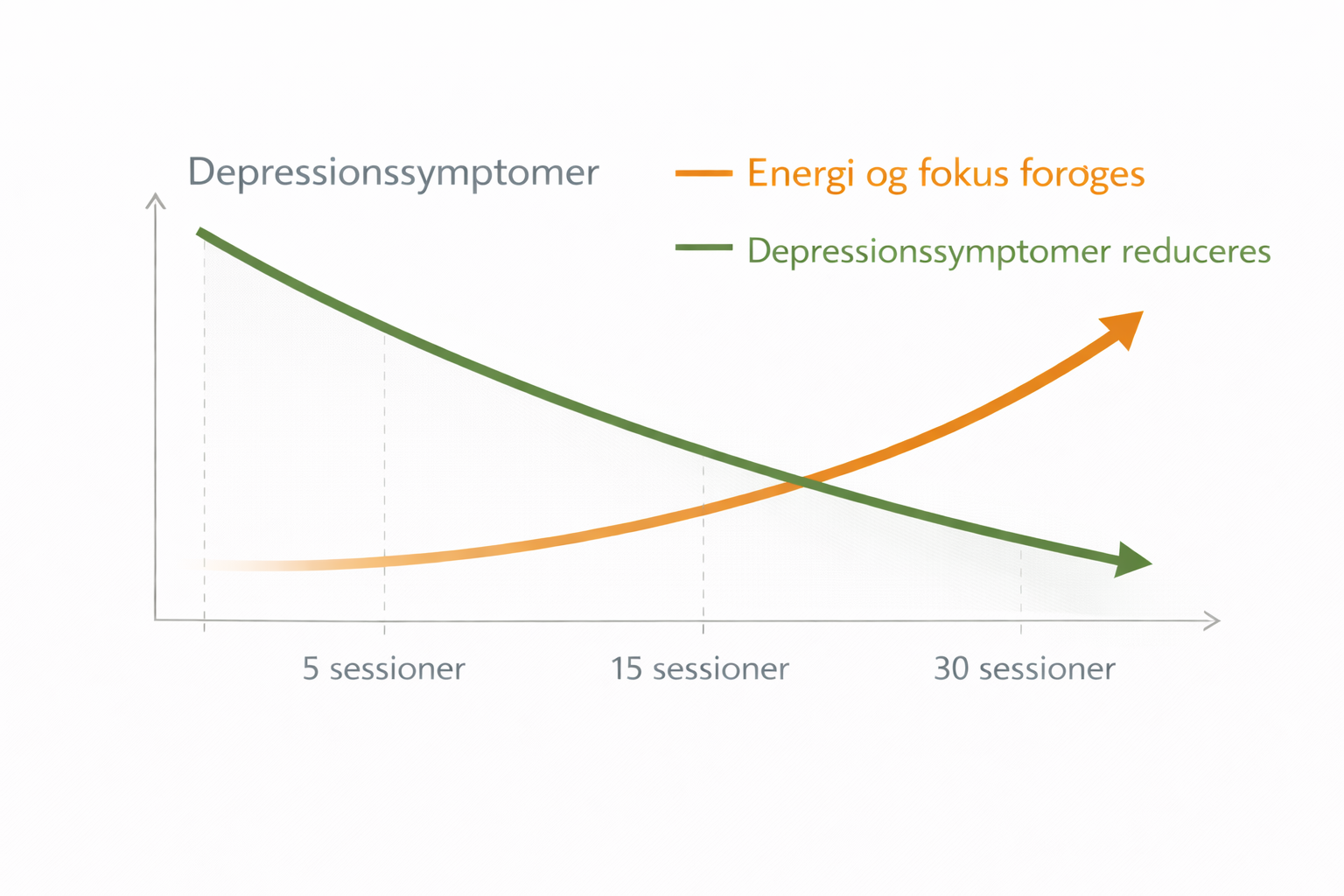
rTMS is performed without anaesthesia, and the patient remains awake throughout the treatment. For the vast majority, the method causes no side effects, and most patients experience a noticeable improvement in symptoms already halfway through the treatment course.
Benefits of rTMS
- Very few, mild, and rapidly resolving side effects
- Can be used in combination with other treatments
- Documented effectiveness in depression
- Preserves cognitive function and memory
How does the treatment take place?
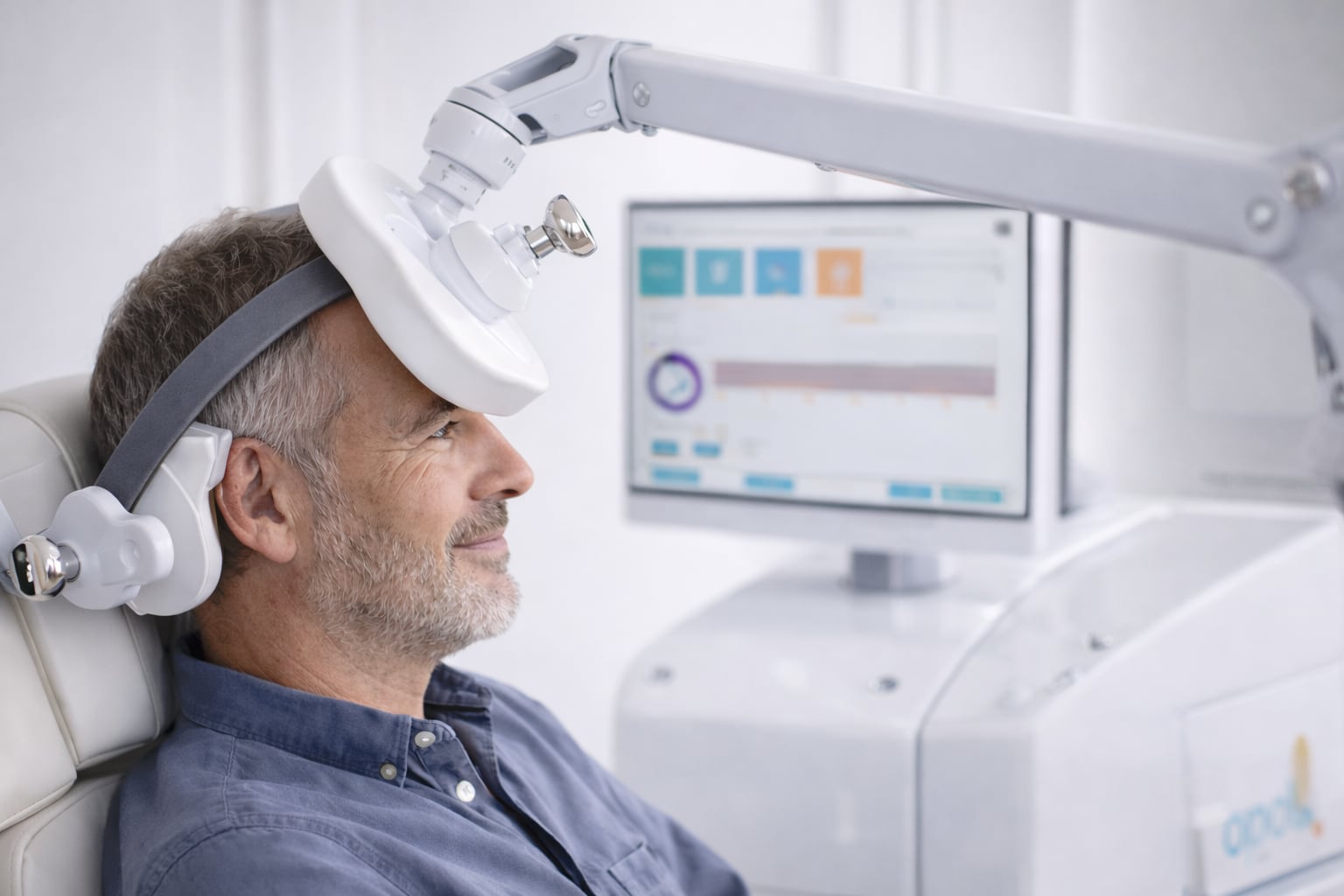
During an rTMS session, a magnetic coil is placed lightly against the scalp. The coil emits brief magnetic fields that stimulate specific areas of the brain. A typical treatment course consists of 30 sessions lasting up to 30 minutes each. Treatment is usually scheduled on all weekdays over six weeks.
The treatment is painless for the vast majority of patients and requires no recovery time. You can therefore continue your daily activities immediately after the session.
Effect and evidence
rTMS is used as a treatment tool for several diseases and conditions. The technology has been studied for decades, resulting in a substantial body of scientific literature describing its therapeutic potential. Selected literature is described on the information pages for each of the respective conditions:
Primary treatment areas
Experimental treatment areas
The treatment is increasingly recommended as a gentle alternative or supplement to medication-based treatment and electroconvulsive therapy (ECT).