

Moderate Depression
Moderate depression falls between mild and severe depression. Compared with mild depression, symptoms are either more numerous or more severe, and they have a clear impact on your ability to function in everyday life. Symptoms are present for most of the day, nearly every day, and have typically lasted for at least two weeks.
People with moderate depression often experience persistent low mood, a loss of interest or pleasure in activities, and significant fatigue. Other common symptoms include:
- Sleep problems or waking up too early
- Difficulty concentrating and making decisions
- Low self-esteem and feelings of inadequacy
- Feelings of guilt, hopelessness, or frequent negative thoughts
- Changes in appetite and weight
- Inner restlessness or feeling noticeably slower than usual
- Thoughts about death or feeling that life is not worth living
With moderate depression, you may still be able to manage parts of your work, studies, or family life, but doing so often requires considerable effort. Everyday tasks can begin to feel overwhelming, and many people gradually withdraw from social contact and activities they once enjoyed.
Moderate depression rarely goes away on its own. It is a medical condition that should be taken seriously and treated. If you have thoughts of suicide or self-harm, you should seek immediate professional help.
Treating Depression with rTMS: How It Works and What to Expect
In moderate depression, activity in the brain regions responsible for mood, energy, and motivation may be reduced. With rTMS, we typically stimulate the left prefrontal cortex to influence the brain networks involved in depression.
The repeated magnetic pulses are intended to strengthen the brain’s ability to regulate thoughts and emotions. Over time, this may help increase energy levels, reduce negative thinking, and gradually restore interest, motivation, and the ability to experience enjoyment.
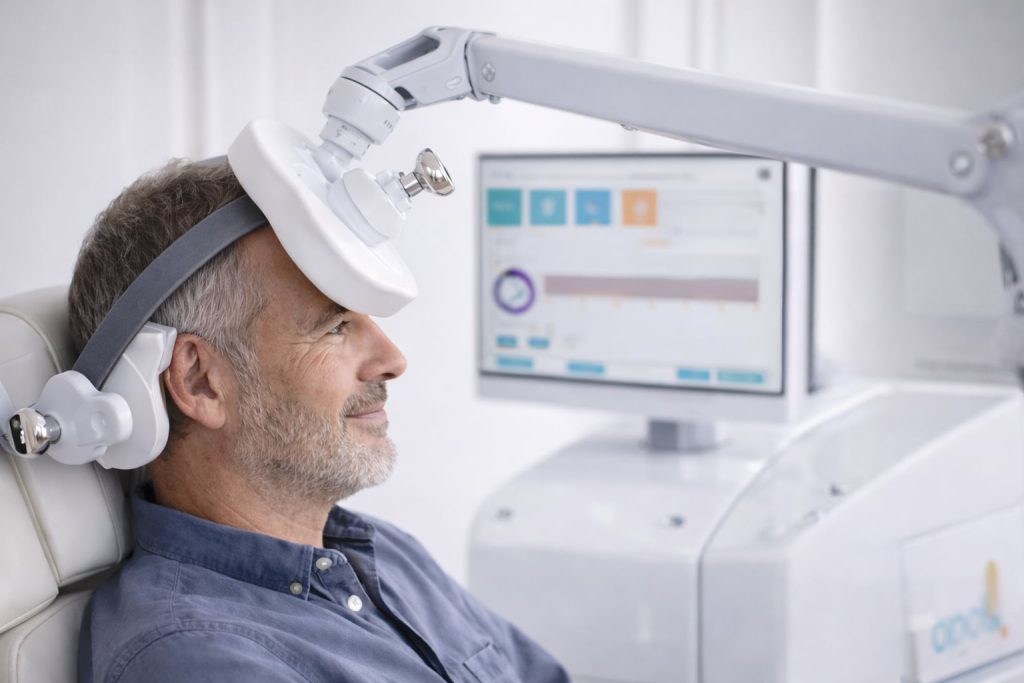
Treatment takes place in the clinic while you are awake and comfortably seated in a chair. During the session, you will typically feel a tapping or tingling sensation on your scalp. No anaesthesia or hospital admission is required, and you can return home immediately afterwards.
The stimulation itself lasts no more than 20 minutes, and we set aside at least 45 minutes for each appointment to allow time for preparation and a short conversation. At our clinic, a full course of treatment typically consists of 30 sessions over 2 to 6 weeks. rTMS can be used either on its own or in combination with antidepressant medication and psychotherapy.
Effect and What to Expect
The effects of rTMS build gradually over the course of treatment. Early signs of improvement may include increased energy, better concentration, fewer negative thoughts, or a greater interest in the world around you. For many people, these changes become more noticeable after several weeks of treatment.
Some people experience a substantial improvement and become almost or completely free of depressive symptoms. Others experience a more moderate benefit, while unfortunately, a small number of people experience little or no meaningful improvement. It is not possible to predict in advance exactly how any individual will respond.
rTMS is a well-established treatment for moderate depression, particularly when antidepressant medication has not provided sufficient benefit or has caused troublesome side effects. For some people, the benefits persist after the initial course of treatment, while others may benefit from occasional maintenance sessions.
The most common side effects are a mild headache or slight discomfort during stimulation. These are generally mild and often decrease as you become accustomed to the treatment.
Compared with Other Treatments for Depression
Moderate depression is often treated with psychotherapy, antidepressant medication, or a combination of both. Many people benefit from these treatments, but some experience insufficient improvement or side effects such as nausea, weight changes, fatigue, or sexual dysfunction.
| Antidepressant medication | Talk therapy | rTMS | |
|---|---|---|---|
| How it works | You take a tablet every day | Sessions with a psychologist, typically once a week | You sit in a chair with a coil over your head for no more than 20 minutes and go home afterwards |
| Duration | Typically 6-12 months | Often several months | Over in 2-6 weeks |
| Side effects | Vary and can be considerable | No physical side effects, but can be emotionally demanding | Few and mild, pass quickly |
| When is it chosen? | First choice for moderate to severe depression | Often first choice, alone or combined with medication | When you do not want medication, or want a short course without medication or talk therapy. Also when medication has not worked well enough |
rTMS offers a medication-free treatment that targets the brain regions involved in depression. The treatment does not require anaesthesia or hospital admission and does not cause the systemic side effects that can occur with medication.
rTMS can be used on its own or alongside psychotherapy and antidepressant medication. As your energy, concentration, and motivation begin to return, it may also become easier to benefit from therapy and to resume the activities that support recovery from depression. In this way, the different treatments can complement and reinforce one another.
Scientific References
The studies below relate to depression in general and are freely available in full text.
- Large systematic review and network meta-analysis of 113 randomized controlled trials evaluating, among other treatments, rTMS for acute depressive episodes: Comparative Efficacy and Acceptability of Non-Surgical Brain Stimulation for the Acute Treatment of Major Depressive Episodes in Adults (Mutz et al., 2019)
- Recent international consensus review on the effectiveness, safety, and clinical use of TMS for depression: Consensus Review and Considerations on TMS to Treat Depression (Trapp et al., 2025)
- Systematic review and meta-analysis of rTMS for depression without psychotic symptoms: The Effect of Repetitive Transcranial Magnetic Stimulation on the Hamilton Depression Rating Scale-17 (Hassanzadeh et al., 2024)
- Meta-analysis of rTMS used in combination with antidepressant medication: Antidepressant Class and Concurrent rTMS Outcomes in Major Depressive Disorder (Zaidi et al., 2024)
Is rTMS right for you?
Book a free, no-obligation initial consultation, and we will assess it together.